
Native Plant of the Month
October 2026

The fungus among us in your autumn woods! As the understory dies back in the fall, mushrooms, lichens and moss burgeon in these cool moist conditions. They are easily seen as woody vegetation dies back. A new world to learn about.
1) bracket mushroom/Dryad’s saddle
2) bleeding Mycenae/bleeding fairy helmet
3) Russell’s emetica (the Sickener)
4) puffball mushroom, Lycoperdon
September 2026

American sweet flag
(Acorus americanus)
Think littorally. Emergent plants live in that specialized area where land and water meet. American sweet flag is a classic native emergent plant. It likes it’s rhizomatous roots wet or damp where they stabilize soil. Tall sword shaped leaves are distinctive in colonies at the shore, maxing out at 4-6 feet in height. It is an excellent choice for native shoreline restorations.
August 2026

Rattlesnake Master
(Eryngium yuccifolium)
A true WI native, child of the prairies and oak savannas, the original habitat of much of the lands around Pine Lake. It’s habit, color, leaf shape and flower head are all distinctive: tall, spiky, gray to white, globe flower head that pollinators enjoy. Yuccifolium refers to basal leaves that resemble the yucca. Pick your sunny site carefully as it does not like to be moved due to a long tap root. As you might expect it prefers dry, sandy, lean soils and requires little water when established.
July 2026

Common Ironweed
(Vernonia fasciculata)
Another tall purple for you, common ironweed aka Vernonia fasciculata. It loves full sun, moist soil and will reward you with 4-6 feet tall stature capped with clusters of intensely purple flowers. It blooms late summer to fall with the rudbeckias and the goldenrods. Butterflies love it, and the birds will devour the fall seed heads. Purple reign.
📸: Johnson’s Nursery
June 2026

Common Milkweed
(Asclepias syriaca)
The milkweeds! Twelve species are native to WI, and all are food for monarch caterpillars. Some are easier to grow, some are rare and endangered, but all a joy to watch when the caterpillars come. Pick one pick all: moon, swamp, whorled, butterfly, clasping leaf, poke, tall green, short green, prairie, woolly, purple. Easiest to grow are common, swamp, and butterfly. WI is in the center of monarch hatching area with the greatest probability of our monarchs reaching Mexico in the winter.
May 2026

Black Cherry tree
(Prunus serotina)
A medium sized native tree to 50-60 feet tall, 20-25 feet wide. Requires full sun but will reward you with long white flowers in spring, and glossy leaves. Young trees have smooth bark which turns noticeably dark, irregular and scaly as they age. It is fast growing and produces dark edible fruit. Wildlife love this tree and all the food it affords, so it is a WI keystone species.
📸: Prestige Tree Experts
April 2026

Shagbark Hickory
(Carya ovata)
Native to the southern part of WI, many of our Chenequa woodlands are mixed oak hickory woods. This majestic tree grows to 80 feet, 40 feet wide with yellow leaves and distinctive spherical nuts. It is a food source for hundred of insects and wildlife love the nuts. The peeling bark is distinctive but only develops with age, as younger trees have smoother bark. Best grown in open sunny spots for the widest canopy.
March 2026

Pennsylvania Sedge
(Carex pensylvanica)
Roy Diblik would be proud! Reason enough to try this sedge. Massed it creates rivers of silky glossy leaves, flopping over in interesting patterns of movement. Shade tolerant, perfect under oak woodlands. Deer are completely uninterested in this plant like so many other sedges. When Roy uses them in his designs he plants swaths of 2.5 inch pots interspersed with colorful flowering native perennials. Height max. Will spread.
Photo: Amanda McClean
February 2026

Maidenhair fern
(Adiantum pedantum)
A perfect deciduous perennial fern for moist shady spots, with delicate fronds, black stems. Spreads 1-2 feet, is 1-2 feet high maximum. Will establish quickest if you keep it moist on planting. Perfect for a “soft landing” under shade trees, and delightful when massed or even used as a border. Deer are disinterested in all ferns, but frogs and turtles love to hide under them.
Photo: Johnson’s Nursery
January 2026

Maple Leaf Viburnum
(Viburnum acerifolium)
If you’ve eradicated the buckthorn from your woods chances are this native beauty has shown up. A 4 to 6 foot tall shrub, 3 feet wide it has delicate maple shaped leaves, white blossoms and fall interest of pink to ruby leaves with dark berries. It spreads by suckers which are rhizomatous, so easily forms thickets and clumps in your woodland. Simple to transplant when you find it as it’s root system is shallow.
December 2025

Joe Pye Weed
(Eutrochium purpureum)
Let’s talk tall prairie beauties with blooms good enough for any ornamental garden. Birds and pollinators love this plant, it will be covered with moths, butterflies and bees in a sunny location. Joe Pye Weed stands a majestic 4-6 feet tall, so back of a border or along your shore - it loves damp feet. Maybe in your rain garden? It blooms August/September with light purple flowers atop stiff stems.
November 2025
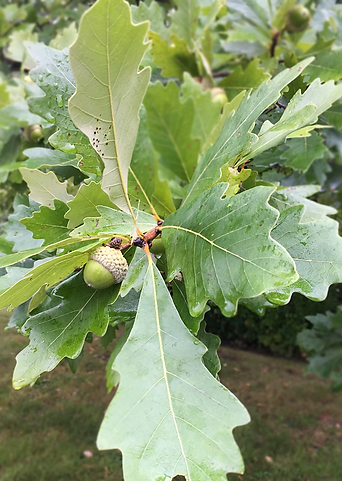
Swamp White oak
(Quercus bicolor)
An extraordinarily long lived (300-350 years) native oak of medium size. It is known for it’s abilty to thrive in damp soils, so is found in wetlands, along streams, rivers and lakes. Consistently moist soil will allow it to thrive; consider this one along your shoreline or in the base of a kettle. Smaller than other oaks like species white oak and bur oak it will attain 50-80 feet in height and 40-70 feet in width. It grows faster than other white oaks. Native oaks support more wildlife than any other species.
See Doug Tallamy’s book The Nature of Oaks (2021.)
October 2025

Ironwood
(Ostrya virginiana)
Ironwood, aka American Hophornbeam is a small understory tree found on the edges of dry woodlands. It is pyramidal with maximum height and width of 25 by 15 feet. It is unusual in that it will grow in full sun to full shade conditions usually under oak or maple overstories. It’s shape, fall color (yellow to red) are value ornamental features as are it’s toothed leaves and hop like fruits. Small mammals and birds love the seeds.
September 2025

Pagoda dogwood
(Cornus alternifolia)
This smaller understory tree is a true four season beauty. Winter accentuates the horizontal branching it is known for, spring brings beautiful white flowers the bees love. In summer an explosion of blue berries will keep the birds happy, followed by autumn color of red to purple leaf change. Prefers moist, part shade edge conditions. Maximum 20 feet tall and 20 feet wide.
August 2025

Common Ninebarrk
(Physocarpus opulifolius)
This rangy beauty is perfect for your sunny buffer zone. Vase-like when young with arching branches, lovely foliage and spirea- like white blooms. Asks for little besides sun, space and well drained soil. Almost never needs pruning. The species is native, with less ecological value to be had from the plethora of cultivars. Roots 2 feet deep and 2-3 feet wide help stabilize slopes. A favorite of bees and butterflies. Can quickly attain 5-8 feet tall and wide under best conditions.